Reps, RPE, and Movement Vocabulary: Writing Fitness Session Notes Your Future Self Can Actually Use
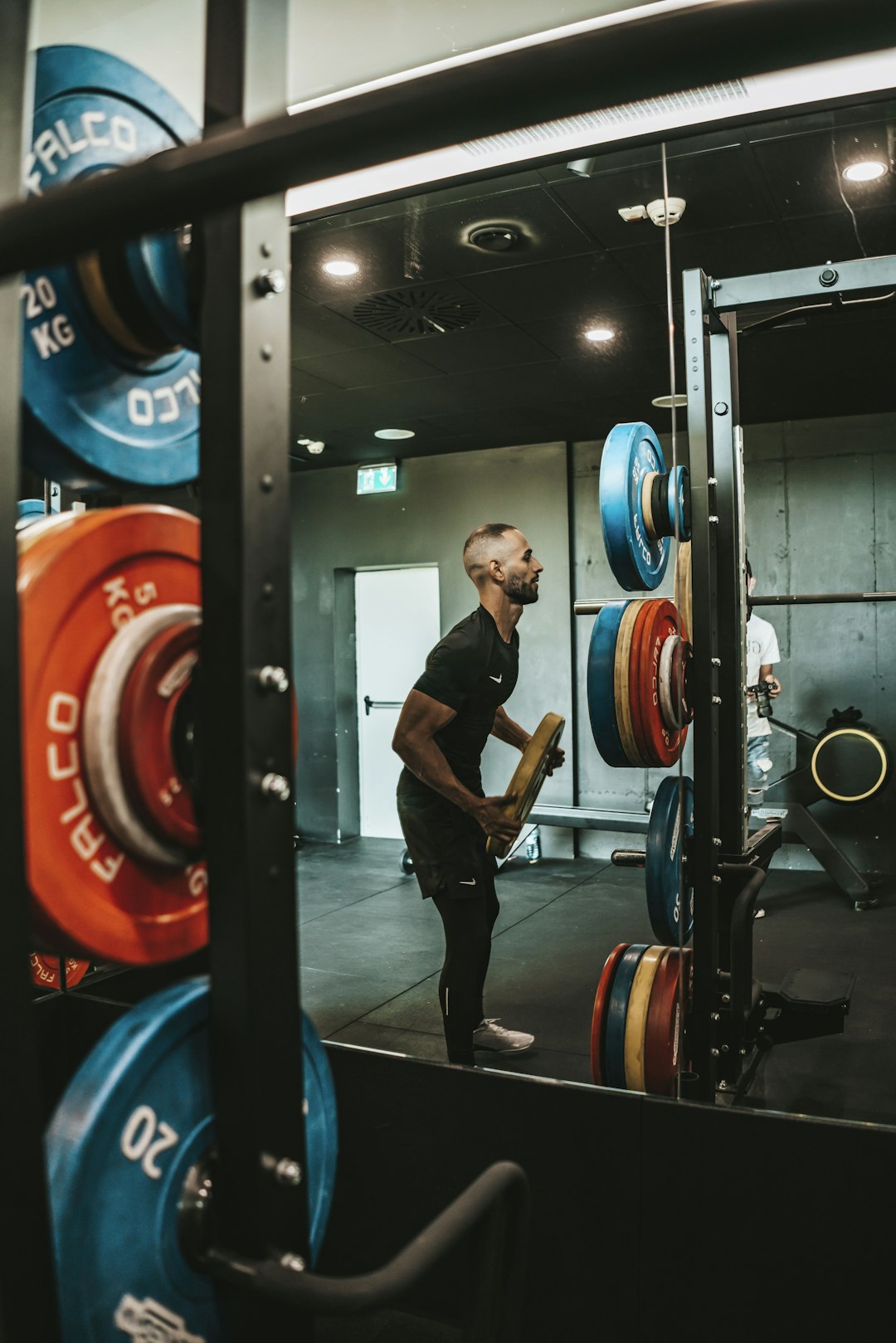
A useful fitness session note records four things in a stable shorthand: the load and volume actually completed, the effort it cost (RPE or RIR), what you observed about movement quality, and the one decision that follows from it. Consistent vocabulary is what makes those notes searchable months later. Coaches who invent fresh phrasing every session end up with a pile of text they cannot scan, while coaches who reuse a small fixed dictionary can pull up a client two minutes before arrival and know exactly what to load the bar with.
Vocabulary is compression, not jargon
The point of standard terms is not to sound technical. It is to write less while keeping precision.
Compare two entries for the same set:
- Loose: "Did some heavier squats today, he seemed to struggle a bit near the end but got through them."
- Standard: "BS 3x5 @ 225. RPE 8.5 on set 3, valgus on reps 4 to 5."
The second is shorter, and it answers next week's question. The first does not, because "heavier" and "struggle" mean nothing without a reference point you will not remember.
A stable dictionary also matters if anyone else ever reads your notes: a subcontractor covering a session, a coach you hire, or you in eighteen months when a client returns after a layoff.
The core terms worth standardizing
You do not need a large glossary. Most one-on-one strength and conditioning work fits inside about a dozen tokens.
Load and volume
- Sets x reps @ load: the backbone of every strength entry. Write
3x5 @ 225and stop. - AMRAP for an all-out set, with the rep count achieved.
- BW for bodyweight, plus added load if any (
BW+25).
Effort
- RPE (rate of perceived exertion, typically 1 to 10) when you program by effort.
- RIR (reps in reserve) if you prefer counting up from failure. Pick one and stay with it. Mixing RPE and RIR across sessions is the single most common way coaches make their own history unreadable.
Prescription detail
- Tempo in the standard four-digit form (
3010) only when tempo is actually part of the prescription. Recording it on every entry when it never varies is noise. - ROM when range of motion is the variable you are manipulating or watching.
- Rest when the interval is prescriptive rather than incidental.
Setup
- Equipment when it changes the movement: trap bar versus straight bar, safety squat bar, belt on or off, heels elevated. "Squat 3x5" means something different on a safety squat bar and you will not remember which one you used.
What usually does not belong
Three categories bloat notes without improving next week's decision:
- Generic motivation. "Great energy today, crushed it!" is not retrievable information. If energy genuinely mattered, record it as a readiness marker with a number or a fixed scale.
- Warm-up detail that never changes. If every session opens with the same sequence, define it once as a named block ("standard lower warm-up") and reference the name. Write out only the deviations.
- Long narrative explanation. The reasoning behind a programming block belongs in the block plan, not repeated in each session entry. Notes are a log, not an essay.
Describing movement without overclaiming
This is where fitness documentation most often drifts outside a coach's scope of practice. The safe habit is to record what you observed, not what you think it means medically.
- Write: "knee valgus on reps 4 to 5 at 225, resolved when load dropped to 205."
- Avoid: naming a condition or injury, which is a call for a licensed provider inside their own scope.
Observation language is not a compromise. It is more useful, because it stays tied to a load and a rep number, which is exactly what you need to program the next session. A condition label tells you nothing about what weight to put on the bar.
The same rule covers client-reported discomfort. Record the client's own words and where they located it, plus what you changed in response. That is a complete, defensible record of coaching decisions.
Tie every entry to a decision
A note that does not change anything is a note you did not need. Close each entry with the next action:
"Hold 225 for one more week, cue brace on the fourth rep, revisit 235 after two clean sessions."
This turns your note history into a decision log. Reading six weeks of entries then shows you a real progression trace, not a diary.
Where voice dictation helps and where it needs checking
Speaking a session note into your phone between clients is far faster than typing it, and the vocabulary above is exactly what makes dictation work well: short, repeated, structured tokens instead of free-flowing prose.
Two caveats worth building into your habit:
Verify numbers manually. Loads, rep counts, and effort scores are the highest-cost errors in a fitness note and the ones speech recognition is most likely to garble. "Two twenty-five" and "two thirty-five" are one syllable apart. Read the numbers back before you approve the note.
Watch for effort-score confusion. "RPE eight point five" is a phrase generic transcription frequently mangles. Purpose-built tools that carry a fitness vocabulary handle it better than a general-purpose dictation engine, but the review step still belongs to you.
Voxoap is built around exactly that loop. You speak a twenty-second recap after the session, a structured note comes back in about eight seconds using fitness-appropriate sections rather than medically framed ones, and nothing is saved until you approve it. It works offline on the gym floor and syncs when signal returns, which matters in basement facilities where cloud-only tools simply fail. Pricing is a flat $14 per month or $109 per year for solo coaches, with no per-client charges. It is currently opening to practitioners through an early-access waitlist.
For the wider framework these terms slot into, see transitioning to SOAP notes for personal trainers, and for the speed side of the workflow, how to write faster session notes as a personal trainer.
Building your own dictionary in one sitting
Set aside twenty minutes:
- Pull your last ten session notes.
- List every distinct way you described load, effort, and movement quality.
- Collapse each group to one preferred form.
- Write the list down somewhere you will see it for the next month.
After four weeks the shorthand is automatic and your notes shrink by roughly half without losing anything you actually use.
Takeaways
- Keep the dictionary small and fixed. Consistency beats completeness.
- Choose RPE or RIR and never mix them across sessions.
- Record equipment only when it changes the movement, and tempo only when it is prescribed.
- Describe what you observed, tied to a load and a rep, rather than naming conditions.
- End every entry with the decision it drives.
- If AI drafts the note from your voice, verify loads, reps, and effort scores by eye before approving.
Frequently Asked Questions
What does RPE mean in a personal training session note?
RPE stands for rate of perceived exertion, a scale (usually 1 to 10) recording how hard a set felt to the client. In a session note it is written next to the set it describes, for example "3x5 @ 225, RPE 8.5 on set 3", so that future programming decisions reference effort rather than load alone.
Should I use RPE or RIR in my fitness notes?
Either works, but use only one across your whole client history. RPE measures perceived effort on a 1 to 10 scale, while RIR (reps in reserve) counts how many reps the client could still have completed. Mixing the two makes historical entries impossible to compare.
How detailed should a personal trainer's session note be?
Detailed enough to answer next week's programming question and no more. In practice that means sets, reps, load, an effort score, one or two movement-quality observations, and the decision that follows. Anything that does not change the next session is usually noise.
Can a personal trainer write about a client's injury in session notes?
A trainer should record observations and the client's own reported words, such as where discomfort was felt and what was changed in response, rather than naming a condition. Identifying an injury is a call for a licensed provider working within their own scope of practice.
Does voice dictation handle fitness terms like RPE and tempo accurately?
General-purpose dictation frequently mangles effort scores and numeric loads because the phrases sound alike. Tools carrying a fitness-specific vocabulary do noticeably better, but numbers should still be verified by eye before a note is approved, since a misheard load is the costliest error in a training log.
Related posts
- Session notes for cash-pay massage practices: staying organized without clinical software claims
- What to look for in voice-to-session-note software (wellness and fitness coaches)
- Offline-first session documentation: why gym-floor and field coaches need it
- A practitioner’s checklist for reviewing AI-assisted session notes
- Structured session notes for fitness and wellness: a simple framework anyone can use
Join the waitlist: voxoap.com
Educational content only, not medical or legal advice.